null null

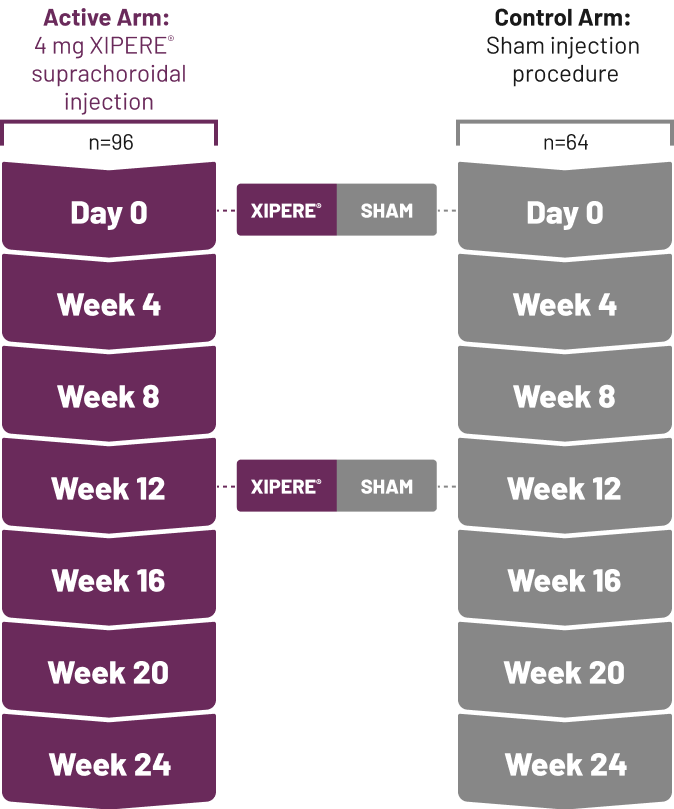
PEACHTREE

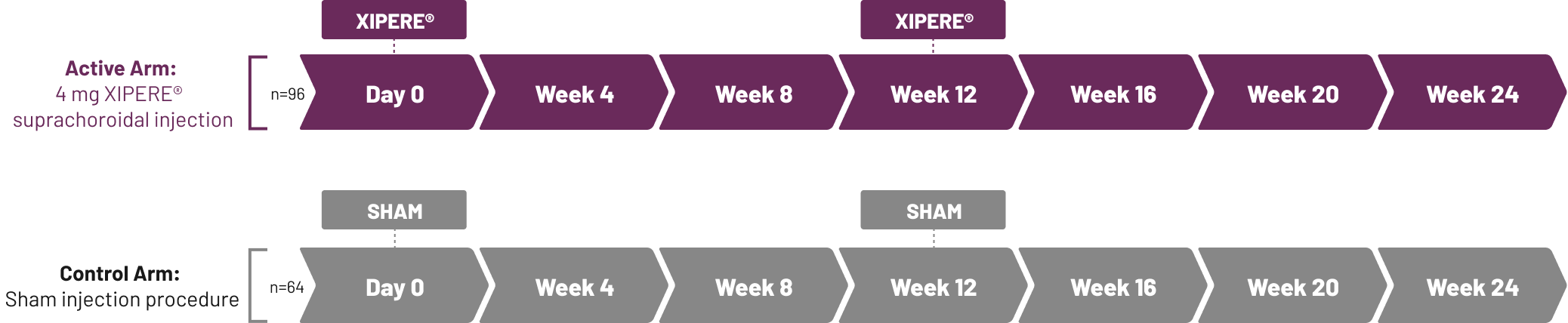
24-week phase 3 pivotal trial

Review PEACHTREE study design >
null null

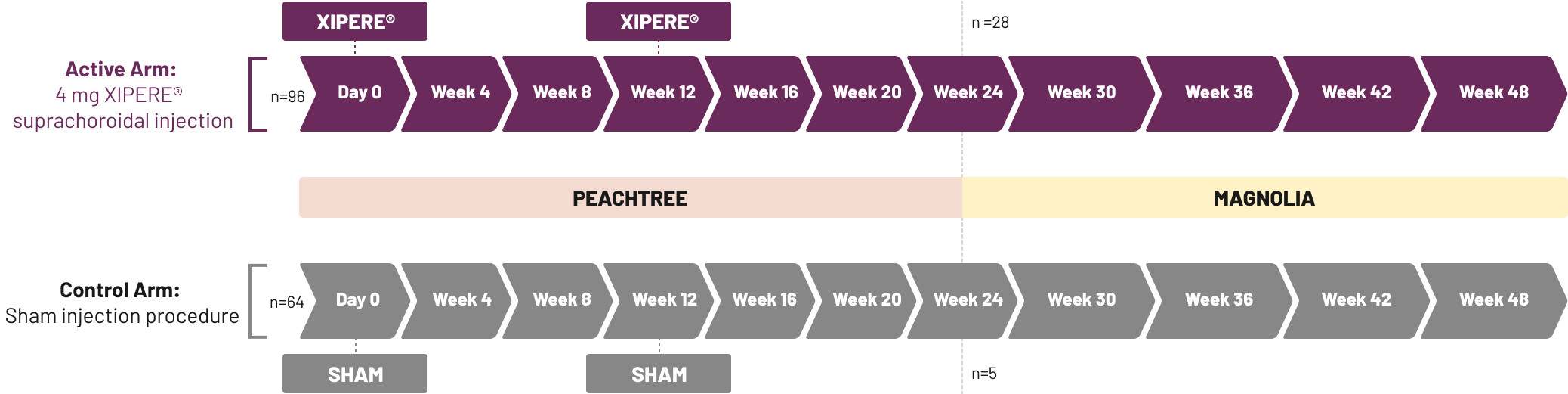
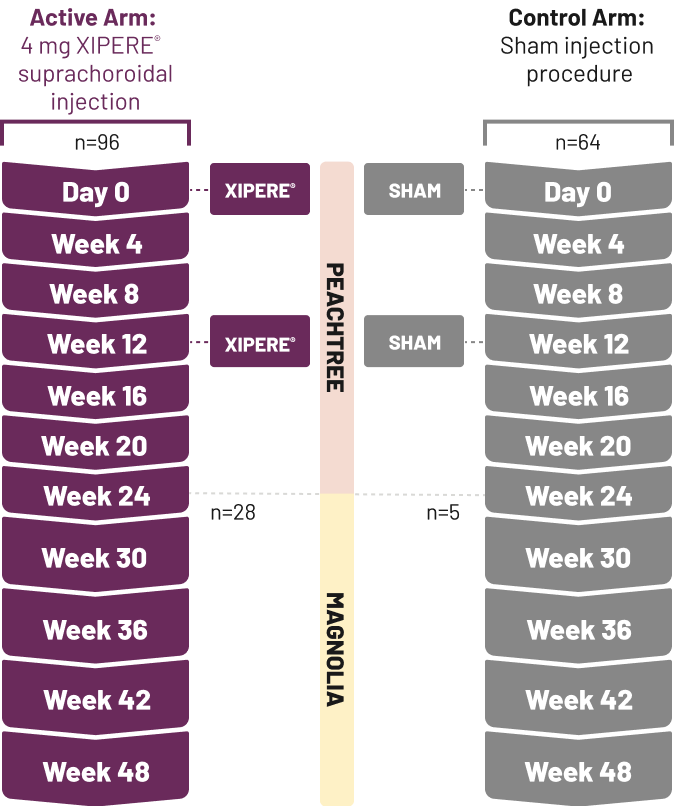
MAGNOLIA

24-week extension study

Review MAGNOLIA study design >
null null

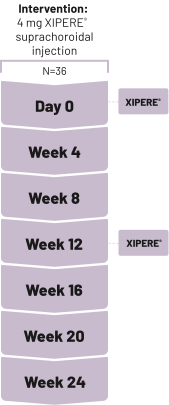
AZALEA

24-week open-label safety study

Review AZALEA study design >
null null

IRIS® REGISTRY

48-week safety analysis

Review IRIS study design >

IRIS® REGISTRY

Elevation in IOP after XIPERE® administration over the 48-week period was low in both a controlled clinical study setting and in real-world practice4*

iris-registry

*The results of this study are based on real-world data and should be considered in the context of the limitations of this type of evidence. While these findings provide insights into the real-world performance of XIPERE®, they may not be directly comparable to results from randomized controlled trials.

MAGNOLIA is a 24-week noninterventional extension study which included patients who had completed the pivotal PEACHTREE study without receiving rescue medication.

IRIS® REGISTRY

4*

iris-registry

*The results of this study are based on real-world data and should be considered in the context of the limitations of this type of evidence. While these findings provide insights into the real-world performance of XIPERE®, they may not be directly comparable to results from randomized controlled trials.

MAGNOLIA is a 24-week noninterventional extension study which included patients who had completed the pivotal PEACHTREE study without receiving rescue medication.

~43% of the IRIS® population followed in the registry had glaucoma/ocular hypertension4

28% of the patients had a baseline IOP >22 mmHg4

PEACHTREE

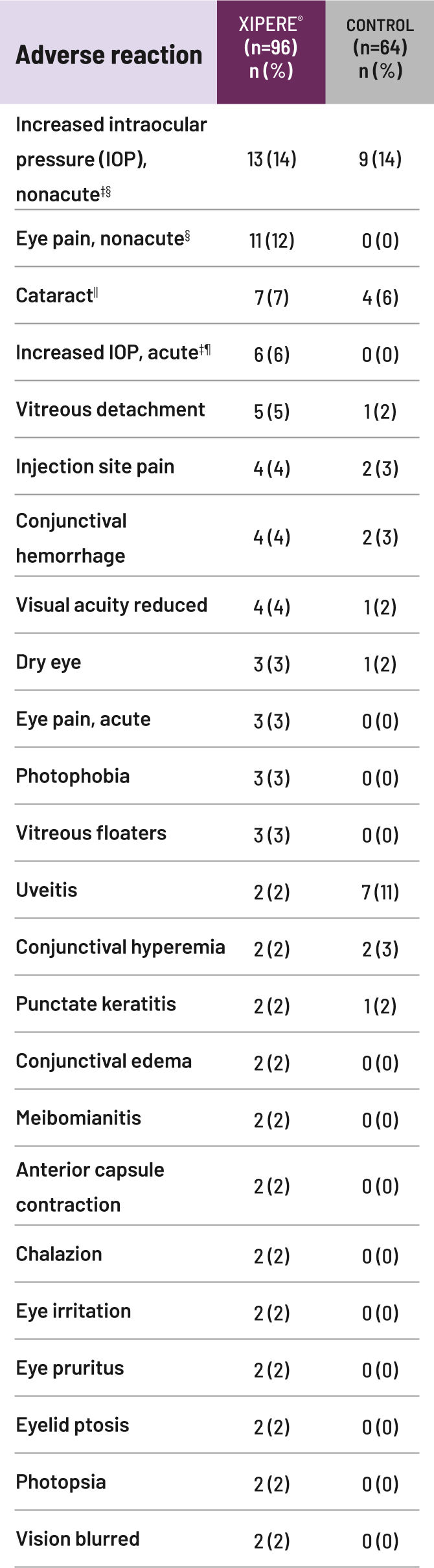
Ocular adverse reactions reported in ≥2% of patients5

iris-registry

Nonocular adverse reactions reported in ≥5% of patients consisted of headache: XIPERE®, 5% (n=5/96); control, 3% (n=2/64)5

No occurrences of endophthalmitis or suprachoroidal hemorrhage in either treatment arm (XIPERE®: n=96; CONTROL: n=64)1

PEACHTREE

5

iris-registry

Includes intraocular pressure increased and ocular hypertension.

§Defined as not occurring on the day of the injection procedure or occurring on the day of the injection procedure and not resolving the same day.

Includes cataract, cataract cortical, and cataract subcapsular.

Defined as occurring on the day of the injection procedure and resolving the same day.

Nonocular adverse reactions reported in ≥5% of patients consisted of headache: XIPERE®, 5% (n=5/96); control, 3% (n=2/64)5

No occurrences of endophthalmitis or suprachoroidal hemorrhage in either treatment arm (XIPERE®: n=96; CONTROL: n=64)1

PEACHTREE POST HOC ANALYSIS
IOP-related adverse events (AEs) with and without rescue therapy5

Overall, 13.5% of patients treated with XIPERE® (13/96) received rescue treatment, compared to 71.9% of control patients (46/64)1

  • All patients in the control arm who experienced AEs related to elevated IOP# were administered corticosteroid rescue therapy2

In a post hoc analysis, one-half the proportion of patients who received XIPERE® without rescue therapy experienced# AEs related to elevated IOP**, compared to control patients who received rescue6

#Includes intraocular pressure increased, ocular hypertension, and glaucoma.

**All events of elevated IOP not occurring on the day of the sham/XIPERE® procedure.

Proportion of patients experiencing AEs related to elevated IOP|| by rescue use6

iris-registry

Overall, 13.5% of patients treated with XIPERE® (13/96) received rescue treatment, compared to 71.9% of control patients (46/64)1

  • All patients in the control arm who experienced AEs related to elevated IOP# were administered corticosteroid rescue therapy2

Proportion of patients experiencing AEs related to elevated IOP|| by rescue use6

iris-registry

In a post hoc analysis, one-half the proportion of patients who received XIPERE® without rescue therapy experienced# AEs related to elevated IOP**, compared to control patients who received rescue6

#Includes intraocular pressure increased, ocular hypertension, and glaucoma.

**All events of elevated IOP not occurring on the day of the sham/XIPERE® procedure.

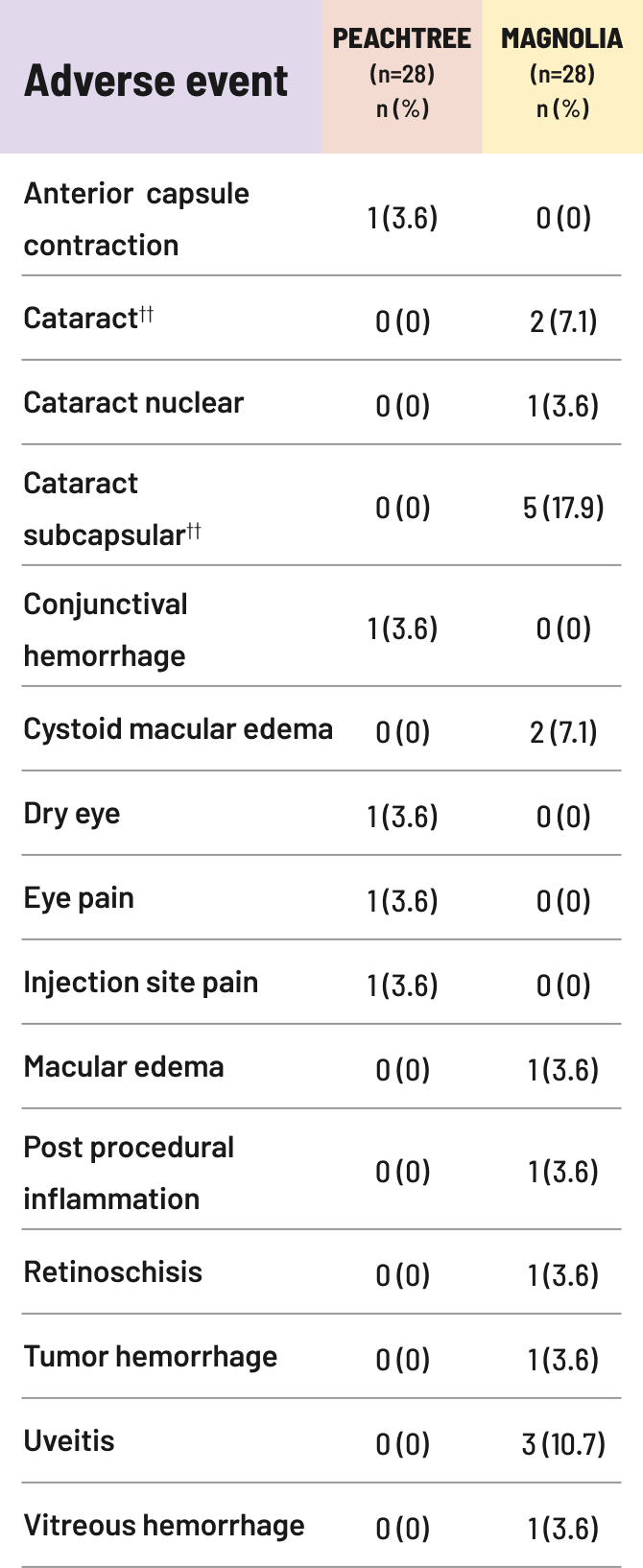
Adverse event profile was consistent across clinical trials3

The 24-week noninterventional extension study MAGNOLIA included patients who had completed the pivotal PEACHTREE study without receiving rescue medication.3

MAGNOLIA

Non–IOP related ocular adverse events in the study eye6

6

iris-registry

††For one patient, the investigator reported cataract subcapsular on the final visit of PEACHTREE and cataract during MAGNOLIA, both within the study eye and having the same start date.

iris-registry

††For one patient, the investigator reported cataract subcapsular on the final visit of PEACHTREE and cataract during MAGNOLIA, both within the study eye and having the same start date.

iris-registry

Of patients treated with XIPERE® who were followed up to 48 weeks:

25% (7/28) had a treatment-emergent adverse event (TEAE) related to cataract2

21.4% (6/28) had a TEAE related to IOP elevations6

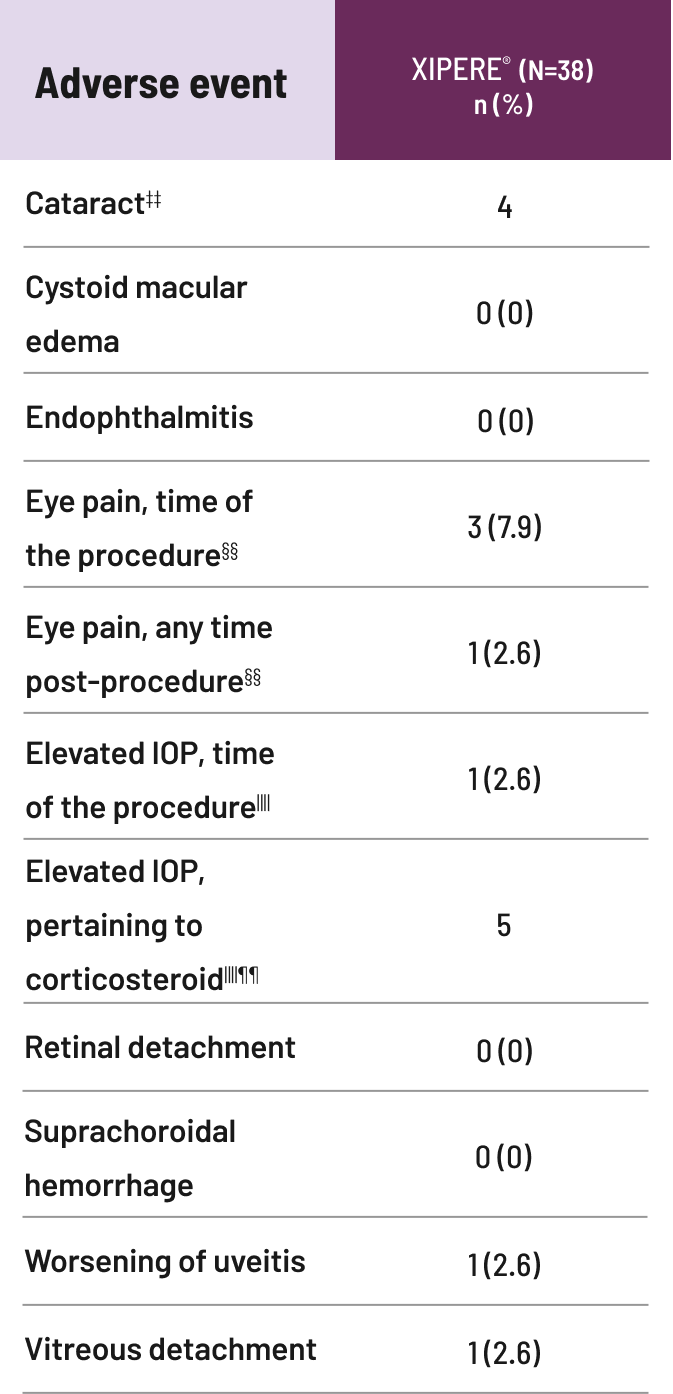
Safety and tolerability of XIPERE® were observed up to 24 weeks with no patients experiencing serious ocular adverse events3

In the open-label safety study, no patients discontinued due to an AE and 37 of 38 patients treated with XIPERE® completed AZALEA.3

AZALEA

Ocular adverse events in the study eye3

3

iris-registry

‡‡Cataract includes the medDRA preferred terms cataract, cataract subcapsular, and cataract nuclear.

§§Eye pain includes eye pain and injection site pain.

∥∥Elevated IOP includes IOP increased and ocular hypertension.

¶¶Includes all events of elevated IOP that did not occur on the day of the procedure.

iris-registry
iris-registry

Rate of elevated IOP is consistent with the PEACHTREE pivotal trial.3

Indication

XIPERE® (triamcinolone acetonide injectable suspension) for suprachoroidal use is a corticosteroid indicated for the treatment of macular edema associated with uveitis.

Important Safety Information

Patients should be monitored following injection for elevated intraocular pressure. See Dosage and Administration instructions in full Prescribing Information.

  • XIPERE® is contraindicated in patients with active or suspected ocular or periocular infections including most viral diseases of the cornea and conjunctiva, including active epithelial herpes simplex keratitis (dendritic keratitis), vaccinia, varicella, mycobacterial infections, and fungal diseases.
  • XIPERE® is contraindicated in patients with known hypersensitivity to triamcinolone acetonide or any other components of this product.
  • Use of corticosteroids may produce cataracts, increased intraocular pressure, and glaucoma. Use of corticosteroids may enhance the establishment of secondary ocular infections due to bacteria, fungi, or viruses, and should be used cautiously in patients with a history of ocular herpes simplex.
  • Hypothalamic-pituitary-adrenal (HPA) axis suppression, Cushing’s syndrome, and hyperglycemia can occur following administration of a corticosteroid. Monitor patients for these conditions with chronic use.
  • In controlled studies, the most common ocular adverse reactions were increased ocular pressure, non-acute (14%), eye pain, non-acute (12%), cataract (7%), increased intraocular pressure, acute (6%), vitreous detachment (5%), injection site pain (4%), conjunctival hemorrhage (4%), visual acuity reduced (4%), dry eye (3%), eye pain, acute (3%), photophobia (3%), and vitreous floaters (3%), and in 2% of patients: uveitis, conjunctival hyperaemia, punctate keratitis, conjunctival oedema, meibomianitis, anterior capsule contraction, chalazion, eye irritation, eye pruritus, eyelid ptosis, photopsia, and vision blurred.
    The most common non-ocular adverse event was headache (5%).
  • Corticosteroids should be used during pregnancy or nursing only if the potential benefit justifies the potential risk to the fetus or nursing infant.

IOP=intraocular pressure.

References

1.Yeh S, Khurana RN, Shah M, et al. Efficacy and safety of suprachoroidal CLS-TA for macular edema secondary to noninfectious uveitis: phase 3 randomized trial. Ophthalmology. 2020;127(7):948-955.

2.Khurana RN, Merrill P, Yeh S, et al. Extension study of the safety and efficacy of CLS-TA for treatment of macular oedema associated with non-infectious uveitis (MAGNOLIA). Br J Ophthalmol. 2022;106(8):1139-1144.

3.Henry CR, Shah M, Barakat MR, et al. Suprachoroidal CLS-TA for non-infectious uveitis: an open-label, safety trial (AZALEA) [published online ahead of print]. Br J Ophthalmol. 2021;0:1-5.

4.Singer M, et al. Presented at: 57th Annual Retina Society Scientific Meeting. September 11-15, 2024; Lisbon, Portugal.

5.XIPERE® [prescribing information]. Alpharetta, GA: Clearside Biomedical, Inc.

6.Data on file. Clearside Biomedical, Inc.
Indication

XIPERE® (triamcinolone acetonide injectable suspension) for suprachoroidal use is a corticosteroid indicated for the treatment of macular edema associated with uveitis.

Important Safety Information

Patients should be monitored following injection for elevated intraocular pressure. See Dosage and Administration instructions in full Prescribing Information.

  • XIPERE® is contraindicated in patients with active or suspected ocular or periocular infections including most viral diseases of the cornea and conjunctiva, including active epithelial herpes simplex keratitis (dendritic keratitis), vaccinia, varicella, mycobacterial infections, and fungal diseases.
  • XIPERE® is contraindicated in patients with known hypersensitivity to triamcinolone acetonide or any other components of this product.